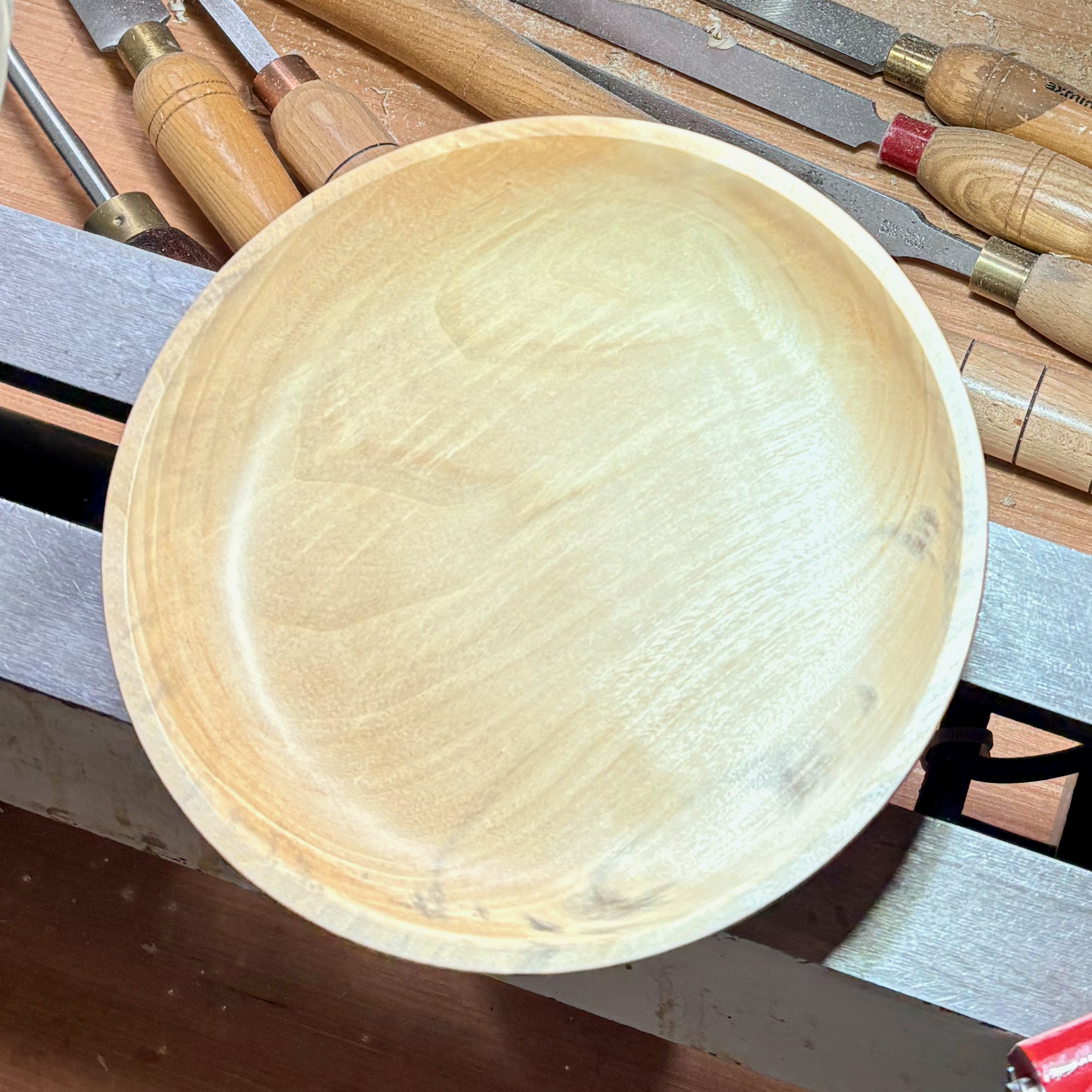
Spalted poplar bowl
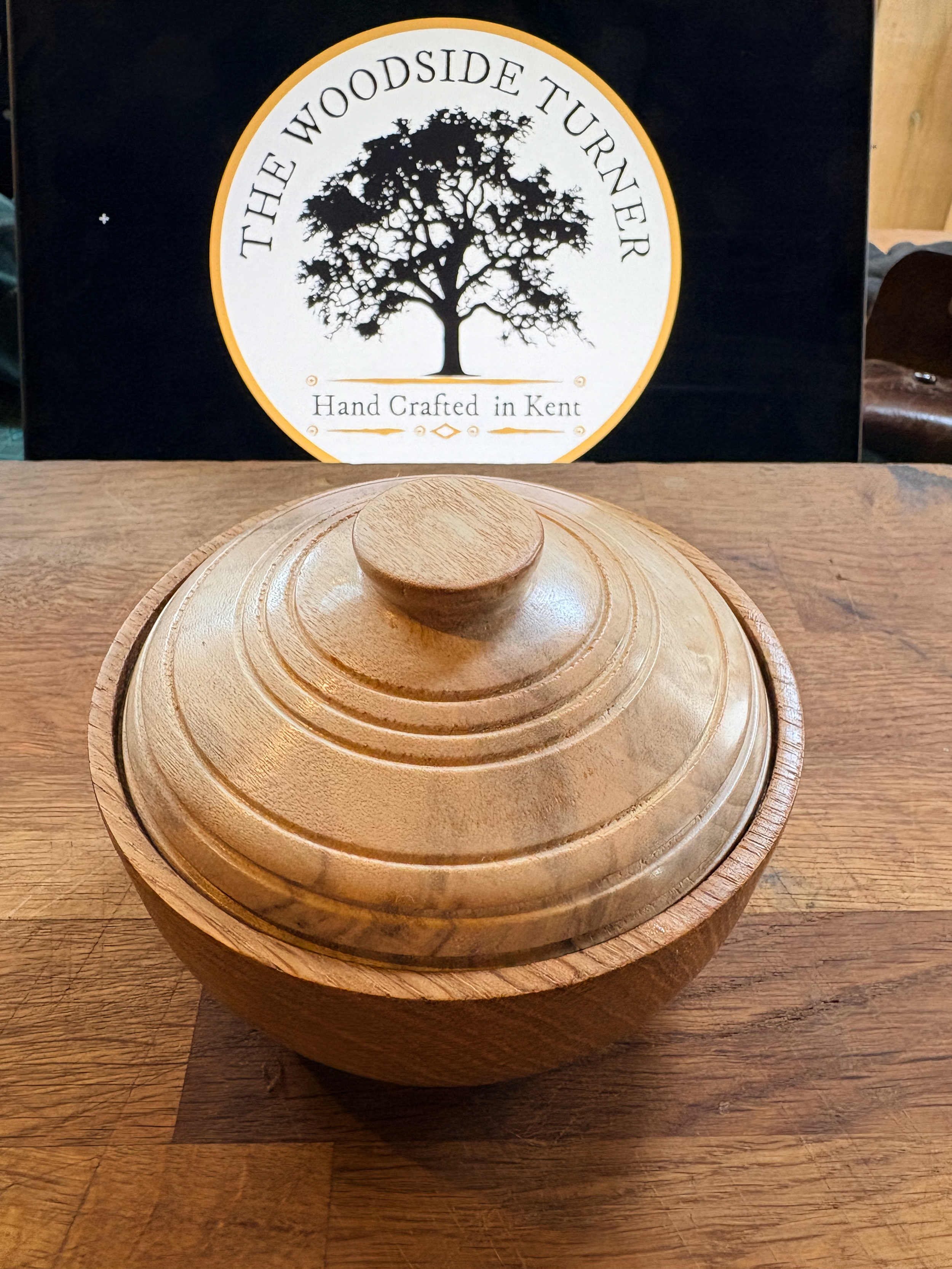
Oak bowl with spalted poplar lid
Poplar
A light, relatively soft hardwood that can look deceptively simple when first cut. Beneath the surface, however, it can hold some beautiful surprises.
Its pale colouring can range from creamy white through to subtle green, grey and brown tones, while spalted Poplar can reveal dramatic dark lines and intricate patterns.
I particularly enjoy turning Poplar because each piece can reveal something completely different as the timber is opened up on the lathe. What starts as a fairly ordinary-looking blank can develop striking grain, colour and character as the turning progresses.
Spalted Poplar is especially interesting. The natural patterns created by fungal activity can give the timber a unique, almost drawn quality, with no two pieces ever looking quite the same.
As with any natural timber, the condition of the wood is important. Spalting can sometimes weaken timber, so each piece needs to be assessed carefully before it is considered suitable for turning.